

Dental Crowns and Bridges in Dundee, MI: Restoring Strength, Function, and Confidence
A damaged or missing tooth can affect much more than your appearance. It can make eating uncomfortable, change the way you speak, affect your confidence, and even impact the health of your surrounding teeth. Fortunately, modern restorative dentistry offers reliable solutions that can repair damaged teeth and restore your smile. Dental crowns and bridges are two of the most common and effective treatments used to strengthen teeth, replace missing teeth, and protect your long-term oral health.
At Ballpark Family Dental in Dundee, MI, dental crowns and bridges are designed to provide patients with natural-looking, durable restorations that improve both function and aesthetics. Whether you need protection after a root canal, repair for a cracked tooth, or a solution for a missing tooth, crowns and bridges can help restore your smile and improve your quality of life.
In this guide, we’ll explain what dental crowns and bridges are, when they are needed, how they work, their benefits, how they compare to other options, and what patients can expect throughout the treatment process.
What Are Dental Crowns?
A dental crown is a custom-made restoration that completely covers a damaged or weakened tooth. Sometimes called a “cap,” a crown is designed to restore the shape, strength, size, and appearance of a tooth while protecting it from further damage.
Crowns are made from strong dental materials that are carefully selected based on the location of the tooth, your bite, and your aesthetic goals. Modern crowns are designed to closely match the color and appearance of natural teeth, making them a seamless addition to your smile.
Unlike a filling, which only repairs a portion of a tooth, a crown provides full coverage and protection. This makes crowns especially valuable for teeth that have experienced significant damage or structural weakness.
When Is a Dental Crown Needed?
There are several situations where a dental crown may be recommended. Some of the most common reasons include:
Protecting a Tooth After a Root Canal
One of the most common uses for dental crowns is protecting a tooth after root canal therapy.
A root canal removes infected or damaged tissue from inside a tooth, allowing the natural tooth structure to remain in place. However, because the tooth may become more fragile after treatment, a crown is often placed to provide additional strength and prevent cracking.
The combination of root canal therapy and a dental crown allows many patients to preserve their natural teeth instead of needing extraction and replacement.
Repairing a Cracked or Broken Tooth
Teeth can crack or break due to injuries, grinding, biting hard objects, or years of wear. A damaged tooth may become painful or sensitive, especially if the crack reaches deeper areas of the tooth.
A crown can hold the tooth together, restore its function, and prevent additional damage.
Strengthening a Weakened Tooth
Large fillings, repeated dental work, or extensive decay can weaken a tooth over time. A crown provides additional support and reduces the risk of fracture.
Improving Tooth Appearance
Crowns can also improve the appearance of teeth that are severely discolored, misshapen, or worn. While cosmetic dentistry options like veneers may be appropriate for some concerns, crowns can provide both aesthetic improvement and structural support.
What Are Dental Bridges?
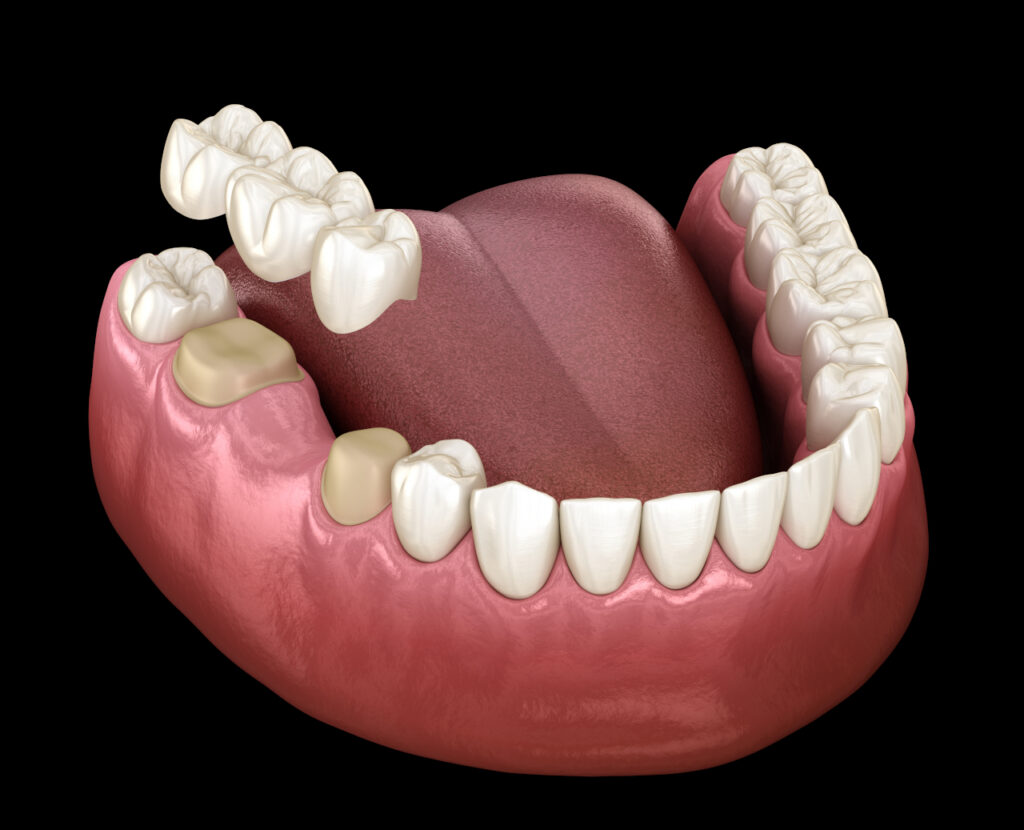
A dental bridge is a restoration used to replace one or more missing teeth. It literally “bridges” the gap created by tooth loss by using artificial teeth supported by neighboring teeth or dental implants.
A traditional dental bridge typically includes:
- Replacement teeth called pontics
- Supporting crowns placed on surrounding teeth
The result is a fixed restoration that restores your ability to chew, speak, and smile confidently.
Unlike removable options, bridges stay securely in place and are designed to function like natural teeth.
Why Replace Missing Teeth?
Many patients underestimate the importance of replacing missing teeth. A missing tooth is not just a cosmetic concern—it can affect your entire mouth.
When a tooth is lost, several changes can occur:
- Neighboring teeth may shift into the empty space
- Your bite may become uneven
- Chewing ability may decrease
- Jawbone stimulation may be reduced
- Additional wear may occur on remaining teeth
Replacing missing teeth helps maintain proper alignment and supports overall oral health.
Dental bridges and dental implants are two common solutions for replacing missing teeth. During a consultation at Ballpark Family Dental, your dentist can help determine which option best fits your needs.
Dental Crowns vs. Dental Implants
Patients often wonder whether they need a crown or an implant. The answer depends on whether the natural tooth can be saved.
A dental crown is used when the natural tooth root is still healthy and worth preserving. The crown protects and restores the existing tooth.
A dental implant is used when a tooth is missing or cannot be saved. Implants replace the entire tooth structure, including the root, with a titanium post placed into the jawbone and a custom crown attached on top.
Whenever possible, dentists generally prefer preserving a natural tooth. However, when saving a tooth is not possible, dental implants provide a long-lasting replacement solution.
At Ballpark Family Dental, treatment recommendations are based on your oral health, comfort, and long-term goals.
The Dental Crown Process
Getting a dental crown typically involves several steps.
Step 1: Evaluation and Preparation
Your dentist will examine the tooth, evaluate its strength, and determine whether a crown is the right solution. Digital imaging may be used to assess the tooth and surrounding structures.
If the tooth requires additional treatment, such as a root canal, that may be completed before placing the crown.
Step 2: Tooth Preparation
The tooth is carefully reshaped so the crown can fit securely over it. This ensures proper function and a natural appearance.
Step 3: Creating Your Custom Crown
Your dentist takes impressions or digital scans of your tooth. These measurements allow the crown to be customized for your bite and smile.
Step 4: Crown Placement
Once the crown is ready, it is securely attached to the tooth. Your dentist checks the fit, bite, and appearance to ensure comfort and function.
The Dental Bridge Process
The bridge process also begins with a thorough evaluation.
Your dentist will examine the area where the tooth is missing and determine whether a traditional bridge or implant-supported bridge is the best option.
For a traditional bridge:
- Supporting teeth are prepared
- Impressions are taken
- A custom bridge is created
- The bridge is securely placed
The result is a restoration that blends naturally with your smile.
Benefits of Dental Crowns and Bridges
Dental crowns and bridges offer many advantages, including:
Restored Function
Crowns and bridges allow patients to chew more comfortably and speak naturally.
Improved Appearance
Modern restorations are designed to match surrounding teeth for a natural-looking smile.
Protection Against Future Damage
Crowns help strengthen weakened teeth and protect them from fractures.
Long-Term Durability
With proper care, crowns and bridges can provide many years of reliable performance.
Increased Confidence
Restoring damaged or missing teeth allows patients to smile, eat, and interact comfortably.
Caring for Your Crown or Bridge
Although crowns and bridges are durable, they still require proper care.
To protect your restoration:
- Brush twice daily
- Floss regularly
- Attend routine dental cleanings
- Avoid chewing extremely hard foods
- Address teeth grinding if necessary
Good oral hygiene protects not only the restoration but also the natural teeth supporting it.
Common Questions About Crowns and Bridges
How long do dental crowns last?
With proper care, many crowns can last 10 years or longer. Longevity depends on oral hygiene, bite forces, and lifestyle habits.
Are crowns painful?
Most patients experience little discomfort during the procedure. Local anesthesia keeps the area comfortable, and mild sensitivity afterward is usually temporary.
Can crowns look natural?
Yes. Modern crowns are designed to closely match natural teeth in shape, size, and color.
Are bridges permanent?
Dental bridges are fixed restorations and are not removed like removable appliances. They can provide long-lasting results with proper maintenance.
What happens if I leave a missing tooth untreated?
A missing tooth can lead to shifting teeth, bite changes, and additional oral health problems. Replacing missing teeth helps maintain proper function.